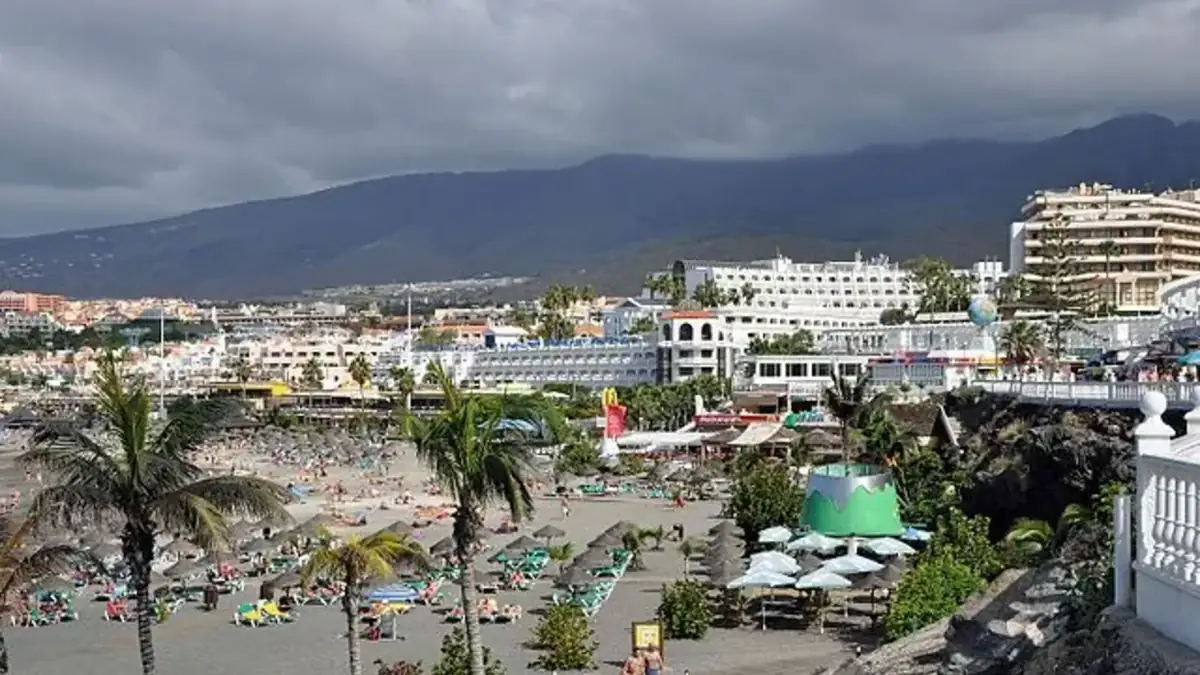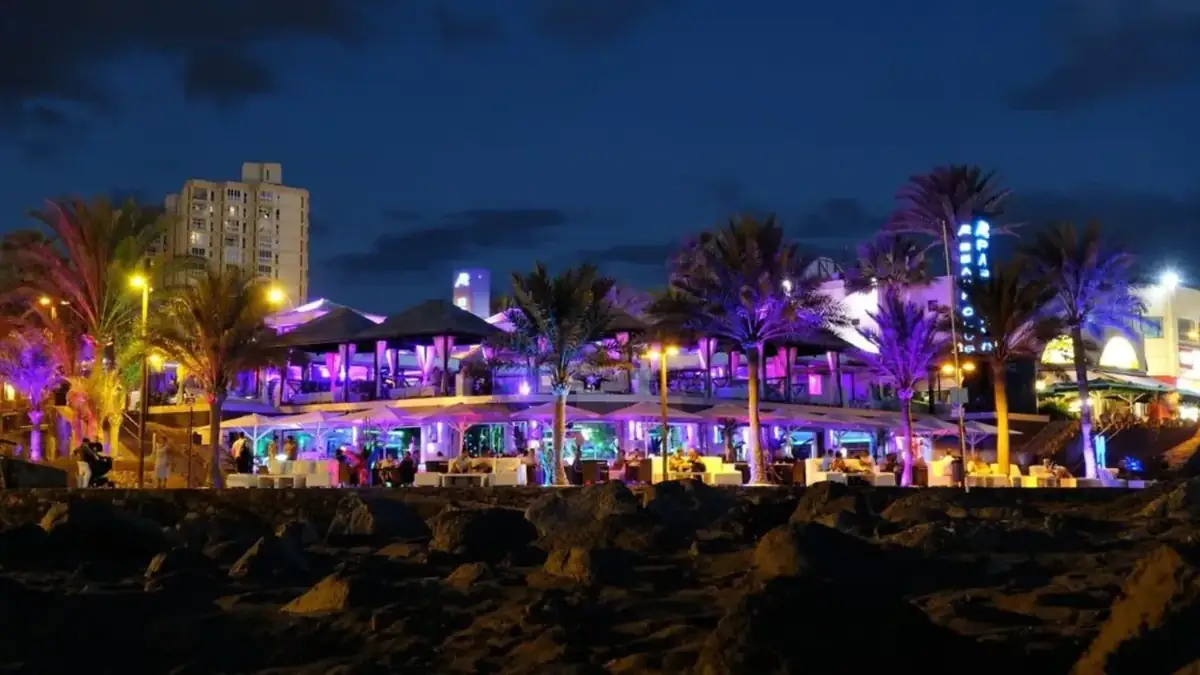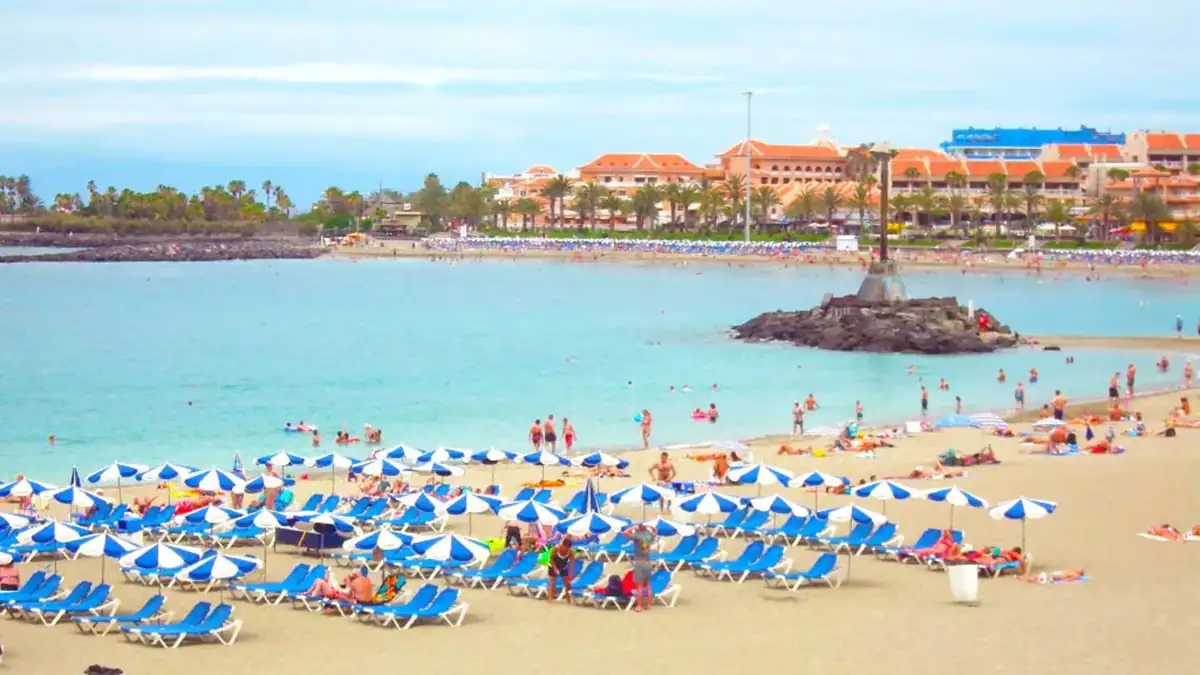


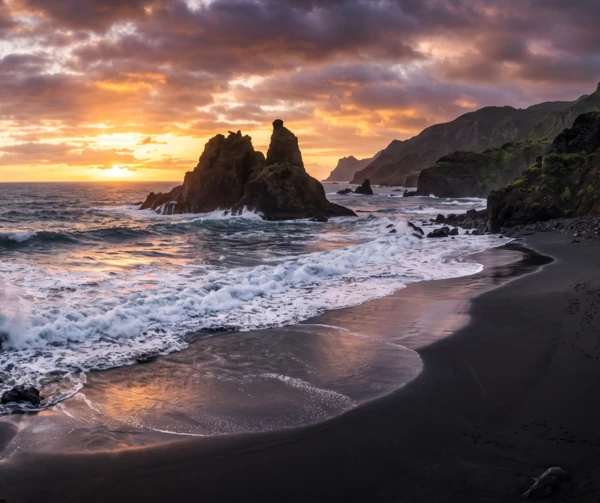
Updated in 2026. Tenerife’s black-sand beaches are one of the best ways to understand the island’s volcanic origins. They are not all alike: some lie in fishing towns with restaurants a few steps away, others appear at the end of an Anaga road, and others hide between northern cliffs, banana plantations, and paths that put you into holiday mode before you even reach the shore.
This guide brings together 20 black-sand beaches in Tenerife, with locations, direct Google Maps links, and practical advice to help you choose according to your plans: swimming with services, watching a sunset, taking a route through the north, visiting from the south, or simply discovering the more volcanic and authentic side of Tenerife’s coast.
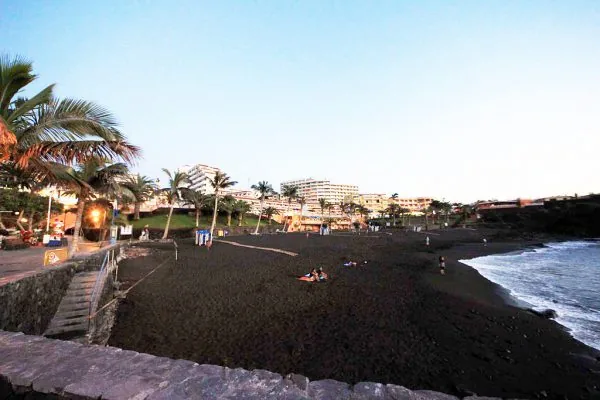
Black-sand beaches in Tenerife: quick answer
- Best black-sand beach with services: Playa La Arena, Playa Jardín, or El Socorro.
- Best black-sand beach for wild scenery: Benijo, El Bollullo, or Los Patos.
- Best area for seeing several beaches on one route: Puerto de la Cruz, La Orotava, and Los Realejos.
- Best choice in the south-west: Playa La Arena, Los Guíos, Ajabo, or Alcalá.
- Important advice: the sea can change quickly in the north and Anaga. Check the flag, swell, and access before swimming.
Which black-sand beach to choose for your trip
Before turning to the map, think about the type of beach you need. In Tenerife, a beautiful beach is not always the most convenient for swimming, and an urban beach is not always the least interesting. The right choice depends on the day, the sea, whether you are travelling with children, and how far you want to drive.
| Plan | Best options | Why choose them |
|---|---|---|
| Easy swimming with services | Playa La Arena, Playa Jardín, Playa de San Marcos | They have easy access, nearby services, and are simpler places in which to spend several hours. |
| Wild volcanic scenery | Benijo, El Bollullo, Los Patos, Las Gaviotas | They are more photogenic, open, and natural, but require careful attention to the state of the sea. |
| Route through the north | Playa Jardín, Martiánez, El Bollullo, El Socorro | They let you combine Puerto de la Cruz, La Orotava, and Los Realejos in a very complete day. |
| Route from the south | La Arena, Los Guíos, Alcalá, Ajabo, Tajao | They are good choices if you are staying in Costa Adeje, Los Cristianos, or Playa de las Américas. |
| Local outing with food nearby | Tajao, Puertito de Güímar, San Marcos, Playa Jardín | They work well if you want a short swim, a walk, and a straightforward meal. |
My practical advice: if this is your first visit and you want an easy choice, select Playa La Arena or Playa Jardín. For scenery with character, visit Benijo, El Bollullo, or Los Patos, but treat them as beaches to observe first and swim at only when the sea is gentle.
Quick map: Tenerife’s top 20 black-sand beaches
If you want to organise a driving route, this is the complete list with locations. The order combines beauty, uniqueness, services, scenery, and ease of inclusion in a trip around Tenerife.
- Playa La Arena – Puerto Santiago, Santiago del Teide. View location in Google Maps
- Playa de La Arena – Mesa del Mar, Tacoronte. View location in Google Maps
- Playa Jardín – Puerto de la Cruz. View location in Google Maps
- El Socorro Beach – Los Realejos. View location in Google Maps
- El Bollullo Beach – La Orotava. View location in Google Maps
- Los Patos Beach – La Orotava. View location in Google Maps
- Benijo Beach – Anaga, Santa Cruz de Tenerife. View location in Google Maps
- Las Gaviotas Beach – Santa Cruz de Tenerife. View location in Google Maps
- San Marcos Beach – Icod de los Vinos. View location in Google Maps
- Martiánez Beach – Puerto de la Cruz. View location in Google Maps
- Los Guíos Beach – Los Gigantes, Santiago del Teide. View location in Google Maps
- Ajabo Beach – Callao Salvaje, Adeje. View location in Google Maps
- Alcalá Beach – Guía de Isora. View location in Google Maps
- La Nea Beach – Radazul, El Rosario. View location in Google Maps
- Radazul Beach – El Rosario. View location in Google Maps
- Las Arenas Beach – Candelaria. View location in Google Maps
- Los Abriguitos Beach – Arico. View location in Google Maps
- Las Eras Beach – Fasnia. View location in Google Maps
- Puertito de Güímar Beach – Güímar. View location in Google Maps
- Tajao Beach – Arico. View location in Google Maps
Black-sand beaches by area: north, Anaga, west, and east coast
To organise your route without spending half your life on the road, group the beaches together. Tenerife may look small, but the day flies by between bends, parking, photographs, and stops to eat.
- Volcanic north: Playa Jardín, Martiánez, El Bollullo, Los Patos, and El Socorro. This is the most complete area for seeing several black-sand beaches on one route.
- Anaga: Benijo and Las Gaviotas, with wilder scenery and mountain roads. Ideal when combined with Taganana.
- West and south-west: Playa La Arena, Los Guíos, Alcalá, and Ajabo. Very practical if you are staying in the south or want to finish with a sunset towards La Gomera.
- East and south-east coast: La Nea, Radazul, Las Arenas, Los Abriguitos, Las Eras, Puertito de Güímar, and Tajao. Perfect for discovering a less familiar side of Tenerife.
If you are travelling with children, prioritise beaches with services and easy access. You can find more in our guide to the best Tenerife beaches for children. For a general route around the island, this guide combines very well with what to see in Tenerife in 2026.
Top 20 black-sand beaches in Tenerife
1. Playa La Arena, Puerto Santiago
Location: Puerto Santiago, Santiago del Teide. View location in Google Maps
Playa La Arena is one of the best-known black-sand beaches in western Tenerife. It has fine volcanic sand, a tourist atmosphere, nearby restaurants, and easy access, so it works very well if you want a beach with services without sacrificing volcanic scenery. It is a good choice to combine with Los Gigantes, Puerto de Santiago, or an afternoon walk along the coast.
Because the area is quite lively, it is advisable to go early if you want to park nearby or find a good spot during high season. Its black sand becomes hotter than pale sand, so sandals may seem like a small detail until you need them.
2. Playa de La Arena, Tacoronte
Location: Mesa del Mar, Tacoronte. View location in Google Maps
Tacoronte’s Playa de La Arena is at Mesa del Mar on the north coast and has the special quality of a beach that feels sheltered by the cliff. Its black sand, the Costa Acentejo setting, and the nearby pools make it a very complete outing for a family or a few hours watching the Atlantic without travelling too far from La Laguna or Santa Cruz.
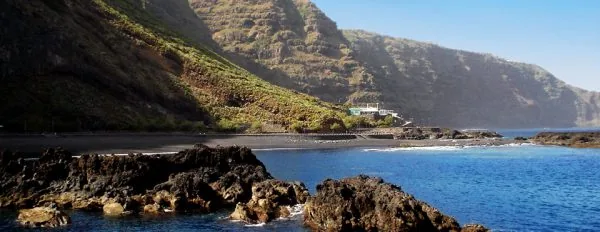
Road access descends through a series of bends, as is common in this part of the island. It is worth driving without rushing and checking the state of the sea, especially on days with a northerly swell.
3. Playa Jardín, Puerto de la Cruz
Location: Puerto de la Cruz. View location in Google Maps
Playa Jardín is one of Puerto de la Cruz’s great classics. More than a single beach, it consists of several stretches of black sand integrated with gardens, palm trees, walking areas, and views of Teide when conditions permit. It bears César Manrique’s hallmark in its approach to the coast: volcanic stone, vegetation, pleasant routes, and spaces designed for an uncomplicated day out.
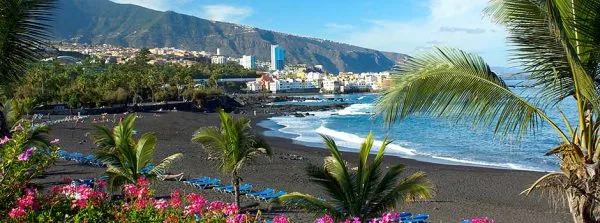
It is ideal if you are staying in the north and want a beach with services, nearby bars, and a seafront promenade. You can also combine it with Punta Brava, the centre of Puerto de la Cruz, or Lago Martiánez.
4. El Socorro Beach, Los Realejos
Location: Los Realejos. View location in Google Maps
El Socorro has a very distinctive personality: dark sand, plenty of space, open views, and a surfing atmosphere. It is one of northern Tenerife’s benchmark beaches for anyone seeking volcanic scenery with services, parking, and an atmosphere that feels more local than resort-like.
It is also a beach where the sea must be respected. The swell can be powerful and conditions change, so check the flag and always follow safety instructions before swimming. It is a consistently good choice for sunset or a stop on a route through Los Realejos.
5. El Bollullo Beach, La Orotava
Location: El Rincón, La Orotava. View location in Google Maps
El Bollullo is one of those beaches that explains why northern Tenerife is so compelling. It is surrounded by cliffs, banana plantations, and paths that gradually descend towards a black-sand beach with a wild air, although it is quite well known. It is not the most convenient if you want to arrive, park, and step onto the sand within two minutes, but it is one of the most beautiful.
Swimming depends greatly on the state of the sea. If the Atlantic is rough, it is best to enjoy the beach from the sand, walk, take photographs, and appreciate the scenery. If you are following a route through La Orotava, Puerto de la Cruz, and northern beaches, El Bollullo should be on the list.
6. Los Patos Beach, La Orotava
Location: La Orotava. View location in Google Maps
Los Patos is a long, volcanic, highly natural beach that is especially spectacular when the tide exposes more sand. It is known as a wild beach with a peaceful atmosphere, but it is not a place to visit without planning: access, the swell, and coastal conditions demand caution.
If you visit, bring comfortable footwear, water, and plenty of time. Do not treat it as an urban beach with services, but as a corner of the coast to enjoy respectfully. When the sea is difficult, it is better to view it from the access points and leave swimming for a more sheltered beach.
7. Benijo Beach, Anaga
Location: Anaga Rural Park, Santa Cruz de Tenerife. View location in Google Maps
Benijo is one of Tenerife’s most photogenic beaches. Volcanic sand, sea stacks offshore, the Anaga mountains behind, and beautiful light at the end of the day. This is a beach for anyone seeking pure scenery rather than convenience. The journey forms part of the experience: winding roads, viewpoints, hamlets, and the feeling of reaching the island’s wildest edge.
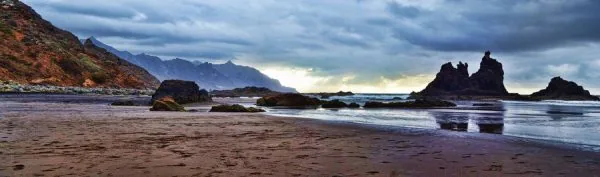
Important: always check access and sea conditions before descending. Benijo can experience rockfalls, currents, and a heavy swell. If conditions are unclear, the visit remains worthwhile for the views and the route through Anaga.
8. Las Gaviotas Beach, Santa Cruz de Tenerife
Location: Anaga coast, near San Andrés. View location in Google Maps
Las Gaviotas is very close to Las Teresitas but offers a completely different experience. It is a more sheltered volcanic-sand beach with a less urban atmosphere. The contrast between the black sand, green hillside, and blue Atlantic gives it plenty of character.
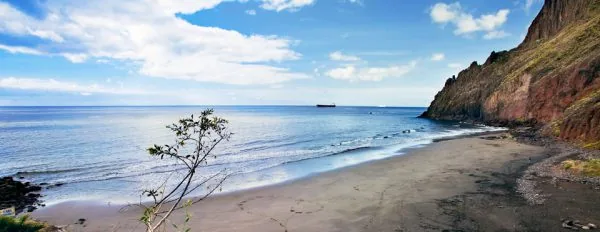
It is a good option if you are near Santa Cruz and want to see a black-sand beach without taking a long route. Even so, do not mistake it for a fully protected beach: check the swell and conditions before swimming.
9. San Marcos Beach, Icod de los Vinos
Location: Icod de los Vinos. View location in Google Maps
San Marcos is a beach of black sand and pebbles with a family atmosphere, nearby restaurants, and a pleasant seafront walk. Because it is more sheltered than other open northern beaches, it is usually a convenient option for anyone who wants to swim near Icod de los Vinos without tackling a difficult cove.
It also fits very well into a route through the north: you can visit Icod, see the Ancient Dragon Tree, descend to San Marcos, and continue towards Garachico or Buenavista. It is a simple, practical beach with a fishing-village character.
10. Martiánez Beach, Puerto de la Cruz
Location: Puerto de la Cruz. View location in Google Maps
Martiánez Beach lies beside one of Puerto de la Cruz’s best-known areas, very close to Lago Martiánez and Avenida de Colón. It is an urban beach of black sand and pebbles, with a promenade atmosphere, surfing, and open ocean views.
It is not always the calmest beach for swimming because the sea can be powerful in this area, but it is one of the easiest to include while exploring Puerto de la Cruz on foot. You can combine it with San Telmo, Lago Martiánez, La Paz, or a meal overlooking the sea.
11. Los Guíos Beach, Los Gigantes
Location: Los Gigantes, Santiago del Teide. View location in Google Maps
Los Guíos is small and urban, with black sand, but it has one enormous advantage: it lies at the foot of the Los Gigantes cliffs. Few Tenerife beaches have such a spectacular backdrop. The experience of swimming or walking beside those volcanic walls is what makes it special.
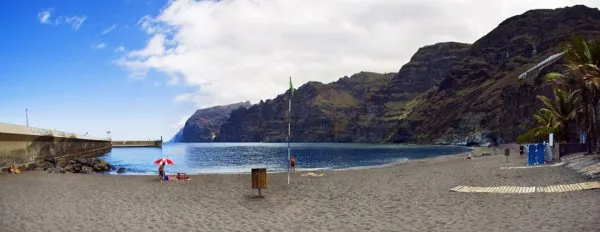
It is perfect for including in a route through western Tenerife. Afterwards, you can visit the harbour, find a viewpoint, or continue towards Puerto Santiago and Playa La Arena.
12. Ajabo Beach, Callao Salvaje
Location: Callao Salvaje, Adeje. View location in Google Maps
Ajabo is a black-sand beach in the south-west that is very practical if you are staying around Costa Adeje, Playa Paraíso, or Callao Salvaje. It has easy access, a promenade, nearby services, and a quieter atmosphere than other tourist beaches in the area.
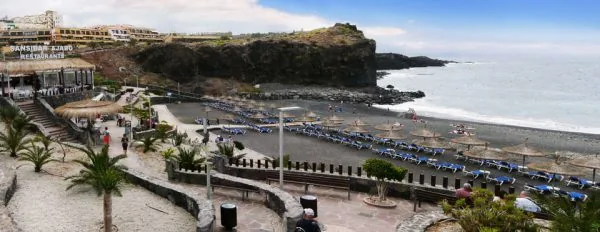
It lacks Anaga’s drama and Los Gigantes’ iconic view, but it is a convenient beach for spending a few hours, watching the sunset, and enjoying that volcanic contrast without travelling too far from the south.
13. Alcalá Beach, Guía de Isora
Location: Alcalá, Guía de Isora. View location in Google Maps
Alcalá Beach is small, has a fishing-village character, and is closely connected to the municipality’s coastal promenade. Its volcanic sand and lapilli blend with the village atmosphere, harbour, and restaurants where you will want to stay for fish after swimming.
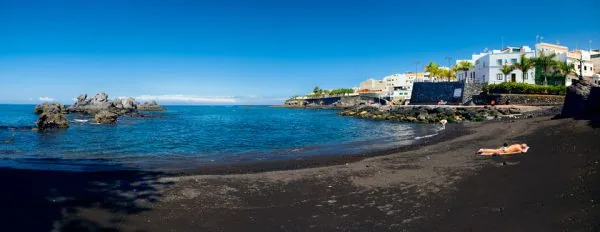
It is an interesting stop if you are travelling through the west and want something less obvious than the most famous beaches. Sunsets towards La Gomera also tend to provide memorable moments.
14. La Nea Beach, Radazul
Location: Radazul, El Rosario. View location in Google Maps
La Nea is a convenient black-sand beach close to the metropolitan area. It has a promenade, equipped areas, and a very local atmosphere, making it ideal for a trip from Santa Cruz or La Laguna without spending too much time on the road.
It is a good choice for families and anyone seeking a beach with services on the east coast. The scenery is less wild than in the north, but that is precisely why it is easy to enjoy.
15. Radazul Beach, El Rosario
Location: Radazul, El Rosario. View location in Google Maps
Radazul combines small areas of black sand with sheltered swimming areas and clear water. It is a good place to swim, snorkel, or spend a few hours by the sea with easy access and restaurants near the marina.
If you are staying in Santa Cruz or arriving through Tenerife North Airport, it can be a very practical stop for a first swim or a relaxed afternoon. As always, check conditions and use the designated areas.
16. Las Arenas Beach, Candelaria
Location: Candelaria. View location in Google Maps
Las Arenas Beach is in Candelaria and combines black volcanic sand with pebbles. It is a simple urban beach that is very easy to combine with a walk around the town, the basilica, the Mencey statues, and a stop for food beside the sea.
On days with a heavy swell, it may be better for looking and walking than swimming. Even so, its location makes it a good stop if you are exploring Tenerife’s east coast.
17. Los Abriguitos Beach, Arico
Location: Arico. View location in Google Maps
Los Abriguitos, in the Abades area, is a black-sand beach with a quieter, more local character. It is not as famous as other volcanic beaches in Tenerife, but that is precisely why it can be a pleasant surprise if you are exploring the Arico coast.
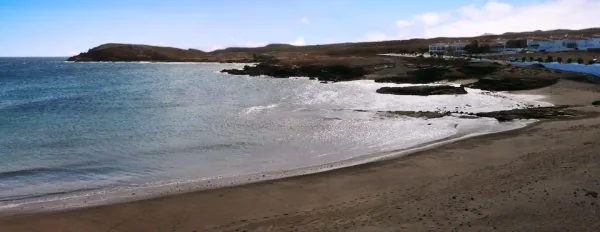
It is a practical stop for anyone travelling between the south and Santa Cruz on the eastern motorway who wants to make a detour to a coastal spot without large crowds.
18. Las Eras Beach, Fasnia
Location: Fasnia. View location in Google Maps
Las Eras is a beach of black sand and gravel in a small coastal settlement in Fasnia. It has a quiet, thoroughly local atmosphere and fits well into an east-coast route for discovering places less frequently repeated in guidebooks.
It is not a classic tourist postcard, and that is part of its charm. If you want an easy swim, a short walk, and a different stop between the south and the capital, it may be a good choice.
19. Puertito de Güímar Beach
Location: Puertito de Güímar, Güímar. View location in Google Maps
Puertito de Güímar has several swimming areas and a very pleasant seaside atmosphere. Its beach combines pebbles and black sand, with nearby services and a promenade that is perfect for stretching your legs after a swim.
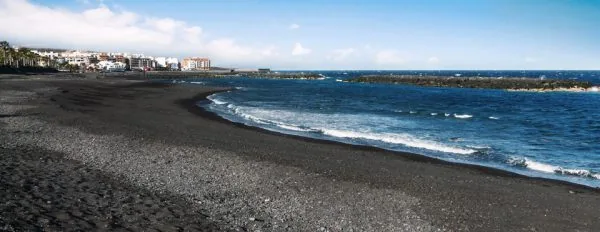
It is one of those stops that is easy to recommend if you are travelling as a family or want a beach with local life, restaurants, and convenient access on Tenerife’s east coast.
20. Tajao Beach, Arico
Location: Tajao, Arico. View location in Google Maps
Tajao is small, has a fishing-village character, and is perfect for anyone who sees the beach as part of a broader outing: approach the sea, walk for a while, and finish with fish at one of the village restaurants. The beach combines pebbles and black sand in a highly authentic setting on the south-east coast.
It is not the most convenient beach for an entire day with a sun lounger and parasol, but it is a stop with plenty of local flavour. If you are exploring Arico, Abades, or the coast farther south, it is worth keeping its location handy.
Before swimming: safety and common sense on volcanic beaches
Black sand is beautiful, but many of these beaches are open to the Atlantic. This means a beach may be calm in the morning and uncomfortable in the afternoon, or look spectacular in photographs but be unsuitable for entering the water that day.
- Always check the flag and swell. If there is a red flag, do not enter. If there is no lifeguard and you are unsure, do not enter either.
- Take care around pebbles and rocks. On mixed beaches, entering and leaving the water can be more difficult than it appears.
- Be careful with hot sand. Black sand can become extremely hot during the middle of the day. Bring sandals or water shoes.
- Do not go too close to breaking waves. Benijo, Los Patos, El Bollullo, and Las Gaviotas are wonderful, but the sea is in charge.
- Choose somewhere easy with children. Playa La Arena, Playa Jardín, San Marcos, and urban areas are better choices than isolated beaches without services.
Tips for visiting black-sand beaches in Tenerife
- Bring comfortable footwear: black sand heats up more in the sun, and some beaches combine sand, gravel, and pebbles.
- Check the state of the sea: the swell can be strong in the north, Anaga, and open areas even on clear days.
- Do not rely only on photographs: some beaches change greatly with the tide.
- Plan your parking: El Bollullo, Benijo, and Mesa del Mar can fill up during high season.
- Combine nearby beaches: Puerto de la Cruz, La Orotava, and Los Realejos are ideal for a northern black-sand beach route.
Recommended route through Tenerife’s black-sand beaches
If you have a car, you can create some beautiful routes without trying to see everything on the same day. Here are three realistic plans designed for enjoyment rather than constantly watching the clock as though you were at an airport.
Half-day route from the north
Start in Puerto de la Cruz with Playa Jardín and Martiánez, continue to El Bollullo if you want a more natural beach, and finish at El Socorro to watch the sunset or walk beside the sea. It is a short, intense, thoroughly volcanic route.
One-day route through Anaga
Set off early from La Laguna or Santa Cruz, climb into Anaga, descend through Taganana, and finish at Benijo. Add Las Gaviotas only if you have enough time and sea conditions are suitable. Parking is limited in this area and the roads require patience.
Route from the south and south-west
If you are staying in Costa Adeje, Los Cristianos, or Playa de las Américas, combine Playa La Arena, Los Guíos, Alcalá, and Ajabo. It is an easy route for seeing volcanic sand without crossing the entire island. For a more local touch, add Tajao on another day and take the opportunity to eat fish.
East-coast route
La Nea, Radazul, Las Arenas in Candelaria, Puertito de Güímar, Las Eras, Los Abriguitos, and Tajao form a less famous but highly interesting route if you already know the classic beaches. They are not all places for a long swim, but they are excellent for stopping, walking, taking photographs, and discovering coastal towns.
To organise your day more effectively, you can also look at our guide to Tenerife’s beaches, prepare a trip through northern Tenerife, or combine the western area with Los Gigantes. If you plan to explore several areas on the same trip, having a hire car in Tenerife gives you much more freedom to adapt your route to the weather, sea, and desire to stop along the way.
Frequently asked questions about black-sand beaches in Tenerife
Why does Tenerife have black-sand beaches?
Because Tenerife is a volcanic island. Over time, lava and volcanic rocks erode to create dark sand, gravel, and pebbles that form many beaches in the north, west, and east of the island.
What is the most convenient black-sand beach in Tenerife?
For easy swimming with services, Playa La Arena in Puerto Santiago and Playa Jardín in Puerto de la Cruz are two of the most complete options. They have easy access, nearby services, and are well suited to families.
What is the most beautiful black-sand beach for photographs?
Benijo, El Bollullo, Los Patos, and Los Guíos are usually among the most photogenic because of their sea stacks, cliffs, and volcanic coastline. They are not, however, always the most convenient for swimming.
Are black-sand beaches better in the north or the south?
It depends on your plans. Northern beaches are usually greener, wilder, and more photogenic, but can also have a heavier swell. Beaches in the south-west are usually easier to combine with tourist areas, restaurants, and straightforward routes.
Does black sand become hotter?
Yes, it normally heats up more than pale sand because it absorbs more solar radiation. During hours of strong sunshine, wear sandals or water shoes to walk comfortably.
Are they safe for swimming?
Many are, but not every beach is safe every day. At open beaches such as Benijo, Los Patos, El Bollullo, or El Socorro, always check the flag, swell, and local instructions before entering the water.
Which black-sand beaches are best when travelling with children?
Playa La Arena, Playa Jardín, San Marcos, and some urban beaches on the east coast are usually better for families because of their access and services. Even so, always check the state of the sea before swimming.