

La Laguna is one of Tenerife’s most beautiful and rewarding visits. It has history, local life, streets where you can walk without looking at the clock, and a historic centre that remains an essential stop in 2026 if you want to understand the island beyond its beaches.
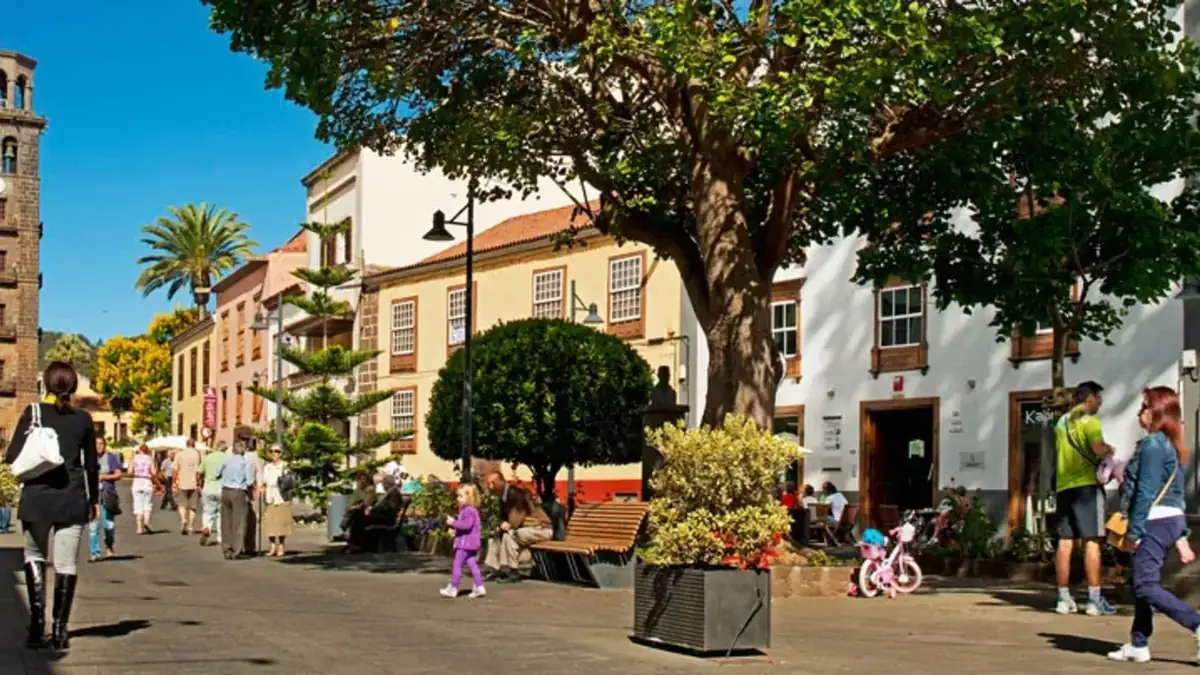
Its official name is San Cristóbal de La Laguna and it is in north-eastern Tenerife, very close to Santa Cruz. Tenerife Tourism notes that its historic centre is a UNESCO World Heritage Site, with pedestrian streets, squares, churches, and colonial buildings that preserve traditional Canary Islands architecture.
Walking route through the historic centre
Begin without rushing around the Cathedral, Calle San Agustín, Calle Herradores, and Plaza del Adelantado. La Laguna is best enjoyed by looking at doorways, courtyards, wooden balconies, colourful façades, and small shops. It is a city for walking, entering a café, leaving, continuing, and letting yourself be carried along.
- La Laguna Cathedral, an easy place for getting your bearings.
- La Concepción Church, with one of the city’s most recognisable silhouettes.
- Calle San Agustín, ideal for seeing historic architecture.
- Plaza del Adelantado, a peaceful and very central stop.
- La Laguna Market, perfect for local produce and an everyday atmosphere.
What makes La Laguna special
UNESCO highlights La Laguna’s urban value as an unfortified city with a grid layout, a model that influenced colonial cities in the Americas. Put simply, this is not merely a beautiful historic centre; it is an important piece of urban history.
It also has an energy that is very different from other parts of Tenerife. There are students, bookshops, bars, terraces, and a cooler climate than on the coast. If you are coming from the south, take a light jacket, especially in the afternoon.
How to combine La Laguna on a route
La Laguna combines very well with Anaga, Santa Cruz, Bajamar, Punta del Hidalgo, or Tegueste. If you have a car, you can explore the historic centre in the morning and follow a scenic road towards Anaga afterwards, always checking the weather and closures if there is a wind or rain warning.
Practical tips
Park outside the pedestrian heart and walk in. Avoid trying to drive through narrow historic streets. If you want to eat at the weekend, book. For photographs without too many people, arrive early, when the streets are still waking and the city has that beautiful silence of wet stone and freshly made coffee.
To complete your urban excursion, combine this visit with what to see in La Laguna or a broader route covering what to see in Tenerife.
How to fit this visit into an itinerary
My favourite way to approach these towns and cities is to choose one main visit and two gentle stops around it. This prevents the day from becoming an endless list and leaves you time to walk, eat well, or make a detour if an attractive viewpoint appears.
Park outside the most central area whenever possible and walk in. In historic centres, saving five minutes in the car is almost never worth the narrow streets, one-way systems, and search for a space.
If the day is clear, combine heritage with scenery. If it is cloudy or windy, focus on the historic centre, market, cafés, museums, or restaurants. Tenerife varies greatly from one area to another, and adapting your plans to the weather is usually better than fighting it.
What to avoid for a better trip
Avoid overloading the day with too many stops. Tenerife invites spontaneity, but every detour, parking stop, and meal adds time. Choose one priority, two extras, and leave time to enjoy them.
It is also a good idea to check the weather by area, not only the island’s general forecast. You can have sunshine on the coast, clouds in the highlands, and cold at altitude on the same day.
If you are travelling in high season, book the essentials and leave flexible activities until the day. This gives you structure without losing that wonderful feeling of discovering the island at your own pace.
If your plans depend on events, opening hours, or regulated access, check the official source the day before. That small action prevents you from arriving after the best part has ended or when a street is closed.
Frequently asked questions
Why is La Laguna in Tenerife famous?
La Laguna is famous for its UNESCO World Heritage historic centre, pedestrian streets, traditional Canary Islands architecture, and university atmosphere.
Can you visit La Laguna on foot?
Yes. The historic centre is best enjoyed on foot, with stops at squares, churches, stately homes, cafés, and La Laguna Market.
Where should you park to visit La Laguna?
The most convenient option is to use public car parks or designated areas around the centre and walk into the historic district. On busy days, it is advisable to arrive early.