

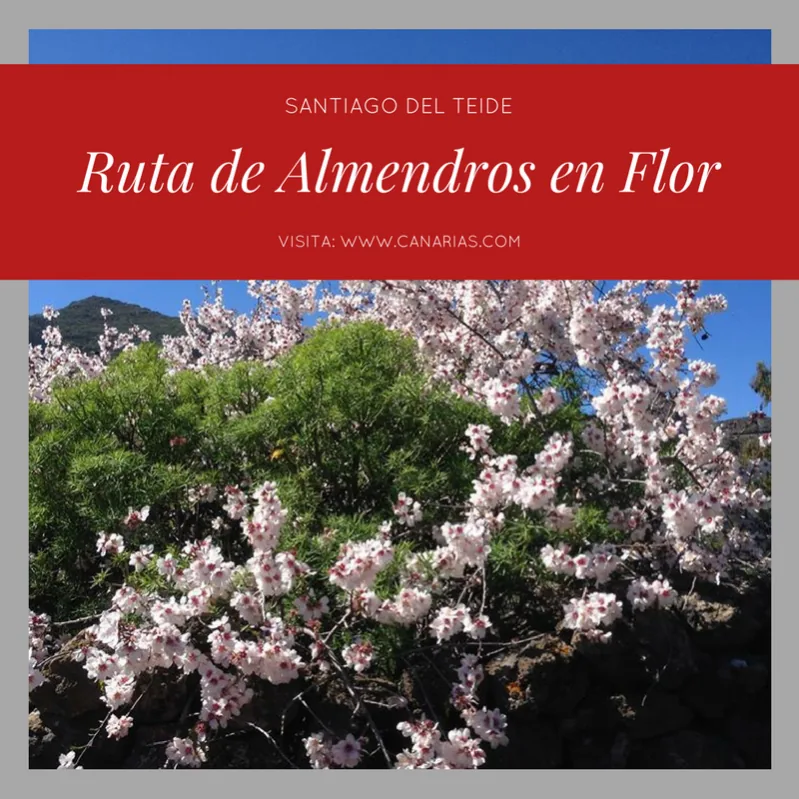
Updated in 2026. The almond-blossom route in Santiago del Teide is one of Tenerife’s most beautiful winter activities. For a few weeks, white and pink flowers cover the volcanic landscape, creating an unforgettable contrast with the black lava, Teide and the mid-altitude villages.
Important: in 2026, the 2026 flowering season has already passed. This guide has been updated with information from the 2026 season and will help you prepare for the next one, normally between late January and March, always bearing in mind that flowering depends on rain, temperature and wind.
Useful summary
- Area: Santiago del Teide, Las Manchas, Valle de Arriba, Arguayo and the area around Chinyero.
- Usual best time: from late January to March, with February the most likely month.
- Classic route: Santiago del Teide, Las Manchas and Arguayo.
- Approximate distance: around 9 km for the complete route.
- Difficulty: moderate, with uneven ground and rural sections.
- Key advice: check the official calendar and book if you want to join a guided walk.
When to see the almond blossom
WebTenerife places the season between late January and March, when the almond trees in Santiago del Teide are usually at their best. The municipality’s official tourism website reported that February brought the most intense flowering in 2026, helped by the winter rain.
In practical terms: do not buy flights or organise an excursion around a single fixed date. Flowering is natural and changes every year. If you are in Tenerife between late January and February, check recent photographs, the municipal calendar and Santiago del Teide tourism channels before choosing your day.
The classic route: Santiago del Teide, Las Manchas and Arguayo
The best-known route starts at the church square in Santiago del Teide, crosses rural and volcanic areas, passes through Las Manchas and ends in Arguayo. WebTenerife describes it as a route of approximately 9 kilometres with moderate difficulty.
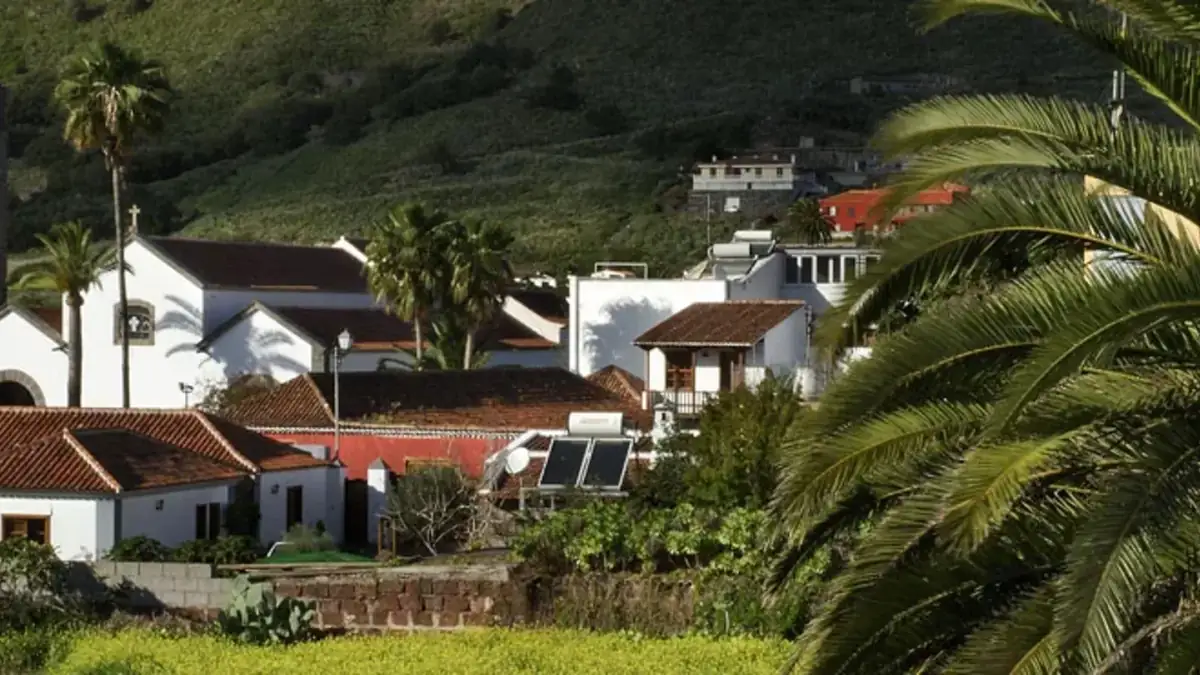
This is a walk to enjoy without rushing. Do not go with the sole aim of “seeing flowers”, because the landscape also tells the agricultural and volcanic story of this part of the island. There are almond and fig trees, stone walls, old paths, views of Teide and areas where the rough lava terrain recalls the power of historic eruptions.
Short route and guided options
If you do not want to complete the whole route, there is a shorter option from the Calvario de Los Baldíos area in Valle de Arriba towards Arguayo. Seasons such as 2026 have also included family walks, short walks, pet-friendly routes and cultural activities centred on the almond tree.
For guided walks during the 2026 season, the organising body stated that booking was compulsory, places were limited and the price was €5 per person. This provides a reference from the latest season, but you must always confirm the price, times and availability in the official calendar for future editions.
What to bring
- Walking shoes: the ground may be uneven.
- A light warm layer: this is a mid-altitude area and it can become cool.
- Waterproof jacket: useful if the forecast is unsettled.
- Water and a picnic: especially if you complete the full route.
- Walking poles: advisable if your knees are sensitive.
- Charged phone: for maps, photographs and notices from the organisers.
Rules to avoid damaging the blossom
The blossom is beautiful, but also delicate. The municipal tourism website insists that visitors respect the environment, do not touch the flowers or break branches and do not leave the marked trails. It sounds obvious, but the same problem occurs every season: a beautiful photograph does not justify damaging a tree or trampling fragile areas.
In addition, parts of the routes pass through protected natural areas such as the land around Chinyero. Take your rubbish home, do not remove anything and avoid parking where you obstruct residents or services.
How to get there by car
If you set out from southern Tenerife, Santiago del Teide is relatively convenient and can be combined with Los Gigantes, Puerto de Santiago or Playa de La Arena. From the north, the route may be longer but very beautiful when combined with Icod, Garachico or Isla Baja.
There is more traffic and limited parking on organised event days. Arrive with time to spare, follow municipal signs and do not try to park across entrances to farmland or on narrow tracks. The route starts better when you do not begin by fighting with the car.
Ideas for completing the day
- Los Gigantes: cliffs, harbour and a sunset walk.
- Playa de La Arena: black sand and a swim if the sea is calm.
- Chinyero: volcanic scenery for those who want to continue walking.
- Garachico: if you come from the north, it fits very well into a full-day route.
- Local restaurants: a good opportunity to try almonds, cakes and mid-altitude cuisine if your visit coincides with the season.
Frequently asked questions about the almond blossom
When do the almond trees flower in Santiago del Teide?
Normally between late January and March. The most impressive period is usually concentrated in February, but it changes every year according to rain, temperature and wind.
Where does the route start?
The classic route starts in the church square in Santiago del Teide and continues towards Las Manchas and Arguayo.
Is it an easy route?
The complete route is considered moderately difficult and is around 9 km long. If you want something gentler, check the short or family walks in the official seasonal programme.
Do you need to book?
Not always if you walk independently, but booking is usually necessary for organised guided walks because places are limited.
Sources consulted for this update: WebTenerife, Visit Santiago del Teide, Santiago del Teide Town Council and the 2026 Almond Blossom programme.
If this outing forms part of a high-altitude trip, read our guide to driving up Teide first and organise the route with time to spare, warm clothing and a clear parking plan.