


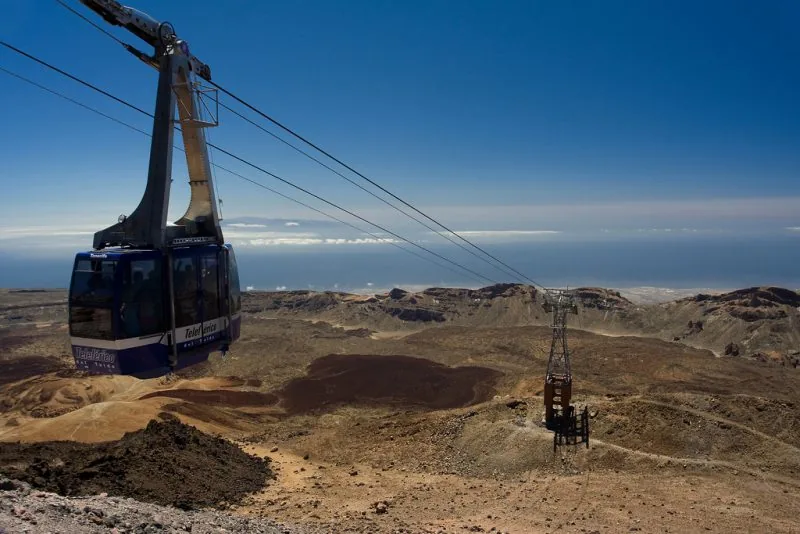
The Teide Cable Car is one of the easiest and most memorable ways to get close to the upper part of the volcano. In just a few minutes, you travel from the base station in the heart of the National Park to La Rambleta, at an altitude of 3,555 metres, with an immense view of Tenerife beneath your feet.
However, it is important to plan the visit properly. This is not an ordinary attraction next to the beach: you are going up into the high mountains, timetables change according to the season, the cable car can be affected by wind, and the permit to reach the summit of Mount Teide has its own rules. Here is a practical, up-to-date guide to help you organise your visit without any surprises.
Teide Cable Car: quick facts
- Location: Teide National Park.
- Base station: 2,356 metres above sea level.
- Upper station: La Rambleta, at 3,555 metres.
- Journey time: around 8 minutes.
- Advance booking recommended: yes, especially in high season.
- To reach the summit: you need authorisation for the PNT 10 Telesforo Bravo trail.
Why the Teide Cable Car is worth taking
Mount Teide is impressive from almost anywhere in Tenerife, but experiencing it from above is something else. The cable car does not take you all the way to the crater. Instead, it takes you to the upper area of La Rambleta, from where you can walk to viewpoints overlooking the north, south and west of the island.
On a clear day, the experience is hard to forget. You can see the National Park spread out below the volcano, the lava flows and Las Cañadas, and, with a little luck, other islands such as La Gomera, La Palma or El Hierro. In spring, broom and tower-of-jewels plants transform the landscape; in winter, if the summit is covered in snow, the contrast with southern Tenerife seems almost impossible.
Practical tip: do not go up intending only to take a photo and come straight back down. If the weather is suitable, it is worth allowing time to walk to the viewpoints, adjust to the altitude and enjoy the visit without rushing.
A brief history of the Teide Cable Car
For a long time, reaching the upper part of Mount Teide was an adventure reserved for people able to tackle a long, demanding hike. The idea of building a cable car arose precisely to make this landscape accessible to more people, so that reaching it would not depend solely on physical fitness.
The project promoted by Andrés de Arroyo y González de Chávez eventually gave shape to the Teide Cable Car, which was inaugurated in July 1971 and began operating shortly afterwards. Major improvements were made to the cabins, stations, machinery and safety systems in the late 1990s and throughout the first decade of the 2000s, adapting the facility to current needs and to its National Park setting.
The cable car’s two stations
The cable car has two main stations: the Base Station, which you reach by road, and the La Rambleta Upper Station, where the trails and viewpoints in the upper area begin.
Base Station
The Base Station is located at an altitude of 2,356 metres. This is where you park, validate your ticket and board the cabin. It is also the place where arriving with time to spare matters most, because the drive, parking, possible queues and changing weather can spoil your visit if you cut it too fine.
The car park has regulated opening hours that vary by season. It can fill up on busy days, so if you are travelling in a hire car, try to book the cable car for a realistic time and avoid arriving at the last minute.
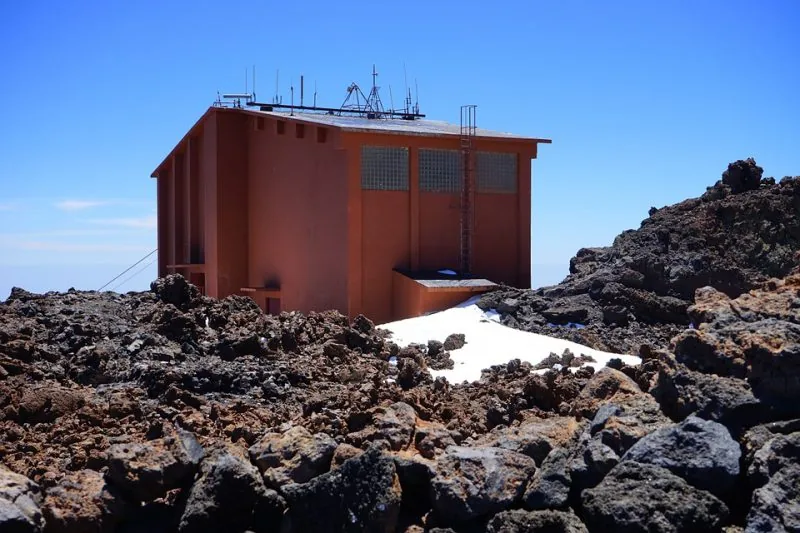
La Rambleta Upper Station
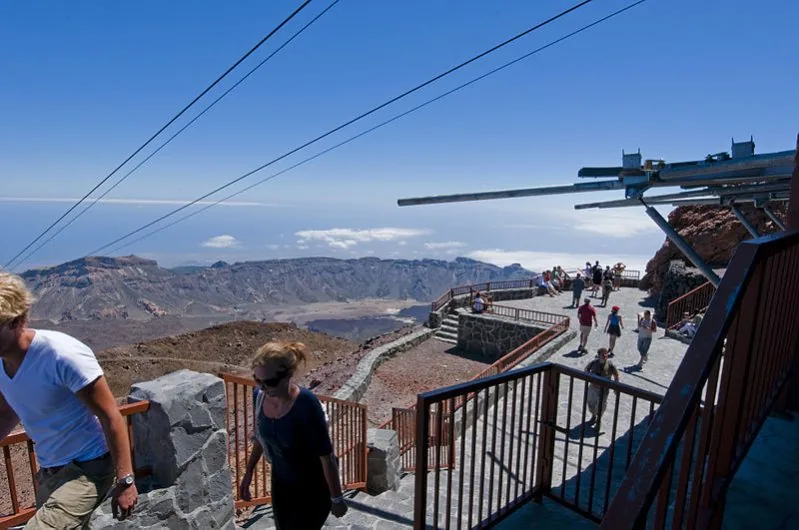
The Upper Station is at La Rambleta, at 3,555 metres. You cannot simply continue straight to the summit from here: you can walk to the authorised viewpoints or, if you have a permit, access the PNT 10 Telesforo Bravo trail to reach the highest point of Mount Teide.
You will notice the altitude at the top. Although the cabin ride is short, you should walk slowly, avoid running, put on warm clothing if it is windy and listen to your body. If you feel dizzy or unwell, it is better not to push yourself.
Teide Cable Car opening times and prices in 2026
The cable car’s opening times are not the same throughout the year. In 2026, normal daytime opening hours vary by season, with longer periods on dates such as Easter and during the summer. The times of the last ascent and last descent also change depending on the period.
As for the price, a standard daytime return ticket is listed from €42 for a non-resident adult and from €21 for a non-resident child. Reduced fares are available for residents, and there are also options with an audio guide or guided route.
Important: do not use old prices as a reference. This post used to mention much lower fares, but they are no longer valid for 2026. Always check the price, ascent time, last descent and conditions on the official website before publishing or booking.
See the official Teide Cable Car prices and opening times
What you can do when you reach the top
When you reach La Rambleta, you have three main options. They do not all require the same level of effort or the same permits, so it is best to decide before buying your ticket.
Pico Viejo viewpoint
This is one of the most highly recommended routes if you do not have a summit permit. From the viewpoint you can see the Pico Viejo crater and, on a clear day, part of southern Tenerife and the western islands. The path is not long, but you are at a very high altitude and you will feel it.
La Fortaleza viewpoint
This viewpoint looks towards northern Tenerife and reveals a different side of the National Park. It is an excellent option if you want to enjoy the upper area without taking the trail to the summit. As always in this area, walk slowly and carry warm clothing even if it is hot below.
PNT 10 Telesforo Bravo trail
This is the trail that connects La Rambleta with the summit of Mount Teide. It is short, but demanding because of the gradient and altitude. You need prior authorisation to walk it. A cable-car ticket alone is not enough.
Permit to climb to the summit of Mount Teide
Access to the summit of Mount Teide via the PNT 10 Telesforo Bravo trail is regulated. Authorisation is managed through Tenerife ON and must be compatible with your cable-car time. If you buy a cable-car ticket without checking the permit first, you may find yourself at La Rambleta unable to climb to the crater.
In addition, since January 2026, access to sensitive National Park trails such as PNT 10 Telesforo Bravo and PNT 07 Montaña Blanca to La Rambleta includes public charges that vary according to the visitor’s profile, time slot and day. It should therefore no longer be treated as an automatically free permit.
Recommended order: first check permit availability on Tenerife ON, then choose a compatible time for the cable car and, finally, organise your route by car or bus. Doing it in the opposite order may leave you with no flexibility.
See information about the PNT 10 Telesforo Bravo trail on Tenerife ON
Go to Tenerife ON for permits and bookings
Who should avoid taking the cable car
Travelling by cable car involves a rapid change in altitude. As a precaution, it is not recommended for pregnant women, very young children or people with cardiovascular or respiratory conditions unless they have first consulted a doctor.
If you have any doubts, it is better not to improvise. You can also enjoy Mount Teide from Las Cañadas, the viewpoints, Roques de García and the road, without needing to reach the highest area.
How to reach the Teide Cable Car by car
A car is the most flexible way to reach the cable car, especially if you want to combine your visit with viewpoints, Roques de García or a circular route through the National Park. The road is paved and accessible, but this is still a high-mountain environment: leave plenty of time, check road conditions if there is snow or bad weather and do not cut your ascent time too fine.
Common routes to the Teide Cable Car
- From Costa Adeje, Los Cristianos or Playa de las Américas: travelling via Chío and the TF-38 is usually a convenient option from the south.
- From Vilaflor: the TF-21 lets you climb from the south on a more mountainous route.
- From Puerto de la Cruz or La Orotava: the TF-21 crosses towards El Portillo and Las Cañadas.
- From Santa Cruz or La Laguna: the TF-24 through La Esperanza is one of the most beautiful routes, entering via El Portillo.
Open Teide Cable Car in Google Maps
You may also be interested in: driving up Mount Teide.
How to get there by bus
You can also reach the area around the cable car by public transport, although you will have less freedom to stop at viewpoints or change your plan as you go.
- Route 342: connects Costa Adeje, Los Cristianos, Vilaflor, Parador, Las Cañadas del Teide and El Portillo.
- Route 348: connects Puerto de la Cruz, La Orotava, El Portillo, the Cable Car and Parador.
Before organising your day: check TITSA’s official timetables. It is not a good idea to improvise your return journey on Mount Teide, because services are limited and distances within the park are considerable.
See TITSA route 342 to Mount Teide
See TITSA route 348 to Mount Teide
Tips before going up
The most common mistake is to prepare for a cable-car visit as though it were a trip to the beach. It may be hot on the coast and windy or cold at the top. The sun is also intense and the altitude is more noticeable than you might expect.
- Take warm clothing: even on clear days.
- Wear comfortable footwear: ideally closed shoes with good soles.
- Take water: especially if you plan to walk to the viewpoints.
- Book in advance: the cable car and permits are not always available for the same day.
- Check the cable car’s status: wind or bad weather can affect operations.
- Do not cut your timing too fine: the drive, parking and ticket validation all take time.
Should you take the cable car or not?
If this is your first time in Tenerife and the day is clear, the cable car is well worth taking. It lets you experience Mount Teide from an altitude that would be difficult for most travellers to reach during a normal visit. However, I would not leave it until the last day of your trip: if it is cancelled because of wind or bad weather, you will have less room to rearrange your plans.
If you cannot get a ticket or permit, or the weather is unsuitable, do not consider the visit a loss. Teide National Park has spectacular viewpoints, roads and landscapes that you can enjoy without going up in a cabin. Roques de García, Llano de Ucanca, Boca Tauce and the route along the TF-38 are reason enough to make the excursion.
Would you like to visit Mount Teide without depending on a fixed timetable?
The cable car is only one part of the plan. With a car, you can arrive with time to spare, stop at Roques de García, adapt your route if the weather changes and return via a different road.
The Teide Cable Car is a wonderful experience, but it works best when planned carefully: check the official timetable, make sure you have the right permit if you want to reach the summit, wear suitable clothing and allow enough time to enjoy the National Park without rushing.
Frequently asked questions about the Teide Cable Car
How much does the Teide Cable Car cost in 2026?
The official Volcano Teide website lists standard daytime return tickets from €42 for a non-resident adult and €21 for a non-resident child, with reduced fares for residents. Always confirm the final price before purchasing.
Does the cable-car ticket include access to the summit of Mount Teide?
No. The cable car reaches La Rambleta. To access the summit via the PNT 10 Telesforo Bravo trail, you need specific authorisation that is compatible with your time slot.
Where do you obtain the permit to climb to the summit?
National Park bookings and permits are managed through Tenerife ON, according to the National Parks booking centre.
Can the cable car close because of wind?
Yes. Cable-car services can be suspended because of wind, ice, adverse weather or technical reasons. Check its status before driving up to the National Park.
Can you travel to Mount Teide by bus?
Yes, but services are limited. If you depend on public transport, check the TITSA timetables and plan your return journey carefully.