

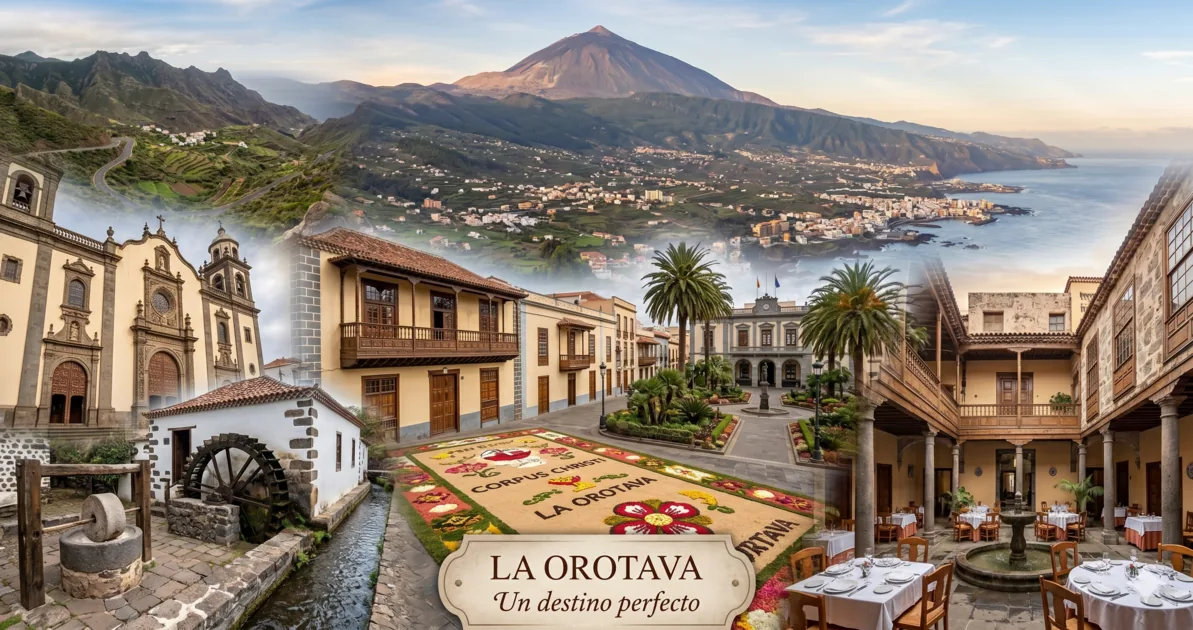
Updated in 2026. La Orotava is one of the most beautiful places to visit in northern Tenerife. It has a historic centre, wooden balconies, gardens, squares, viewpoints over the valley, and a quiet elegance that invites you to walk slowly. Whether you are coming from Puerto de la Cruz, Teide, or the metropolitan area, it deserves much more than a quick stop.
The Town Council itself suggests exploring the historic district on foot, visiting places such as Casa de los Balcones, Jardines Victoria, the old watermill route, and other historic buildings in the centre. That is the best way to experience it: park, walk, and look upwards.
What to see in La Orotava
Casa de los Balcones
It is one of the town’s best-known images. Traditional architecture, an interior courtyard, wood, and handicrafts. Even if you do not go inside, the façade alone is worth the stop.
Jardines Victoria
A perfect place to rest, take photographs, and see the historic centre from another perspective. The gardens are close to Plaza de la Constitución and work very well as part of a walking route.
La Concepción Church
One of the municipality’s major heritage landmarks. The surrounding area invites you to walk without rushing and connect with historic streets.
Casa Lercaro and historic mansions
La Orotava is full of stately architecture, courtyards, and façades that reflect the town’s historic importance. Do not walk with your eyes fixed only on the map: part of the charm lies in the streets between one place and another.
Old watermill route
A different route for understanding how water and agricultural activity shaped life in La Orotava. Ideal if you want to add something less typical to the main walk.
Recommended half-day route
Start at Plaza de la Constitución, walk down towards Jardines Victoria, and continue to Casa de los Balcones, Casa Lercaro, and La Concepción Church. Finish with coffee, lunch, or a viewpoint over the La Orotava Valley.
Combining La Orotava with other activities
- Puerto de la Cruz: perfect for completing the afternoon beside the sea.
- Teide from the north: one of the most beautiful roads up to the national park.
- Icod and Garachico: if you want to continue towards the north-west.
- Botanical Garden: a peaceful option if you enjoy plants and walking.
Practical tips
- Wear comfortable footwear: there are slopes and cobbles.
- Park outside the heart of the historic centre if you do not know the area.
- Book a table if you are going at the weekend or during festivities.
- If you are continuing to Teide, keep warm clothing in the car.
- Do not try to photograph everything in a hurry: La Orotava is better in the details.
Frequently asked questions about La Orotava
Can you explore La Orotava on foot?
Yes. The historic centre is best enjoyed on foot. Leave the car for arriving, leaving, or travelling to other municipalities.
Is it a good visit with children?
Yes, although it is advisable to adapt the pace because of the slopes. Gardens, squares, and ice cream help a great deal, as they so often do in life.
Which day is best for visiting?
Any day with a good forecast. If you want to eat somewhere specific or your visit coincides with festivities, book in advance.
If you are exploring this part of the island, it will help to keep our guide to what to see in northern Tenerife at hand, along with the option to hire a car in Puerto de la Cruz so that you can travel without depending on timetables.
How to fit this visit into an itinerary
My favourite way to approach these towns and cities is to choose one main visit and two gentle stops around it. This prevents the day from becoming an endless list and leaves you time to walk, eat well, or make a detour if an attractive viewpoint appears.
Park outside the most central area whenever possible and walk in. In historic centres, saving five minutes in the car is almost never worth the narrow streets, one-way systems, and search for a space.
If the day is clear, combine heritage with scenery. If it is cloudy or windy, focus on the historic centre, market, cafés, museums, or restaurants. Tenerife varies greatly from one area to another, and adapting your plans to the weather is usually better than fighting it.
What to avoid for a better trip
Avoid overloading the day with too many stops. Tenerife invites spontaneity, but every detour, parking stop, and meal adds time. Choose one priority, two extras, and leave time to enjoy them.
It is also a good idea to check the weather by area, not only the island’s general forecast. You can have sunshine on the coast, clouds in the highlands, and cold at altitude on the same day.
If you are travelling in high season, book the essentials and leave flexible activities until the day. This gives you structure without losing that wonderful feeling of discovering the island at your own pace.
If your plans depend on events, opening hours, or regulated access, check the official source the day before. That small action prevents you from arriving after the best part has ended or when a street is closed.