


Updated for 2026. If you have arrived here looking for guachinches in Tenerife, you probably want something simple: to eat well, try genuine Canarian food, avoid paying tourist-area prices and, along the way, understand what on earth makes these places so special.
Here is the short answer: an authentic guachinche is not a restaurant with rustic décor. It is a house, winery or family-run space where wine from the owners’ own harvest is sold alongside a small selection of homemade dishes. That is exactly where its charm lies: it does not try to look like anything else. A simple table, steaming chickpea stew, grilled cheese, carne fiesta, potatoes, local wine and the feeling that you have been invited to a Canarian family lunch.
That said, Tenerife is full of places that advertise themselves as guachinches, and they do not all work in the same way. This guide therefore gets straight to the point: what a guachinche is, how to recognise a good one, what to order and which municipalities have options that let you plan a route without driving around blindly.
In this guide you will find:
- What a guachinche is and how it differs from a traditional restaurant or bodegón.
- How to choose an authentic one without making things complicated.
- Areas and municipalities where you can look for guachinches in Tenerife.
- An extensive list of guachinches by town or area.
- Which dishes to order and advice for travelling by car.
- Frequently asked questions to help plan your visit.
What is a guachinche in Tenerife?
A guachinche is a very Tenerife-specific way of selling home-grown wine accompanied by homemade food. The tradition began in wine-growing areas, especially in the north of the island, when families opened part of their home or winery to sell the wine from their harvest.
Canarian regulations define it as a temporary activity linked to wine from the owner’s own harvest. In practical terms, this means three important things for anyone going there to eat:
- The wine must come from the owner’s own harvest.
- Opening is limited and depends on wine still being available.
- The menu must be short, with just a few traditional dishes.
So, if you walk into a place with an enormous menu, twenty desserts, a cocktail list and international cuisine, it may well be an excellent establishment, but it is not the classic guachinche concept. Tenerife also has superb bodegones, taverns and Canarian restaurants; it is simply worth calling each type of place by its proper name.
If you want to check the official information, Tenerife Tourism maintains a directory of guachinches, while the Government of the Canary Islands publishes the regulations governing this activity.
How to choose a good guachinche
My advice is simple: do not search only for “the best guachinche in Tenerife”. Look for the one that best suits your route, your appetite and your patience. The best-known places may be full, some open only on certain days and others close when the wine runs out.
Before setting off, check the following:
- Call ahead. Opening times can change at genuine guachinches. If you are travelling from the south or the other side of the island, one phone call can save your afternoon.
- Do not expect an endless menu. Having only a few dishes is normal. That is part of the appeal.
- Allow plenty of time. The most popular places fill up quickly at weekends, on public holidays and at peak times.
- A car is best. Many are in mid-altitude areas, on secondary roads or in hillside neighbourhoods. Parking is not always easy, but getting around by car helps enormously.
- Ask what turned out especially well that day. Sometimes the star dish is not the one you expected, but the one that has just come out of the kitchen.
Best areas for visiting guachinches in Tenerife
The leading area is the north, particularly La Orotava, Los Realejos, Santa Úrsula, La Victoria and La Matanza de Acentejo. This is where the combination of vineyards, mid-altitude farmland and traditional home cooking is most evident.
There are also interesting options around Icod, La Guancha, El Rosario, Arafo, Granadilla, Guía de Isora, San Miguel, Arona and Vilaflor. In the metropolitan area, La Laguna, Tacoronte, Punta del Hidalgo and Santa Cruz have guachinche-style establishments or Canarian restaurants that can work very well if you do not want to travel so far north.
Guachinches in La Orotava
La Orotava is one of the strongest municipalities to start with. Its eateries, wineries and guachinches are spread across La Perdoma, Camino de Chasna, Las Medianías and the higher areas. It is a good choice if you want to combine lunch with a visit to the historic centre, the valley or even a route towards Teide.
- El 23, Camino La Quinta, Barranco San Antonio.
- Adelina la del Ratiño, Carretera General La Perdoma, El Ratiño area.
- El Aguacatero, Calle Abejera.
- El Caminero, TF-21 main road.
- Casa Estela, La Hondura area.
- Casa Tata, Camino La Quinta.
- La Chaotera, Calle Pino.
- El Chorrillo, La Haza Primera area.
- Choza Las Cañas, Calle El Sauce.
- Felichan, Carretera General La Perdoma.
- Hermanos Polo, Calle Alzados Guanchez.
- Lala, Carretera General La Perdoma.
- El Laurel, Carretera General La Perdoma.
- El Molinero, Calle Los Salesianos.
- El Morreta, Carretera Las Medianías.
- La Palmera, Calle El Sauce.
- Los Pascasios, La Perdoma.
- El Paso, Camino de Chasna.
- Ramón, Camino de Los Gómez.
- Romance, Carretera General Las Cañadas.
- El Timplillo, Camino de Montijos, San Antonio.
- El Tornero, Las Laderas.
- Vicente La Fuente, Calle La Punta.
A perfect plan: walk around La Orotava, have lunch in the upper area and make your way leisurely back down towards Puerto de la Cruz or Los Realejos. If you are heading up to Teide after lunch, watch the time: the mid-altitude roads are much more enjoyable when you are not in a hurry.
Guachinches in Los Realejos
Los Realejos is another classic destination. Family-run places serving Canarian food, grilled meat, chickpea stew, escaldón and local wine are plentiful here. It is a very convenient area if you are travelling between Puerto de la Cruz, La Orotava, Icod or Garachico.
- Barmerina, TF-5 main road.
- El Barranco, Calle 25 de Julio, La Montaña.
- Bodega El Carmen, Caserío El Granadillar.
- El Brezal, Calle El Brezal.
- Los Caballos, El Lagar, La Gañanía.
- Casa Evelio, Calle 25 de Julio.
- Casa Milagros, El Brezal area.
- Los Chicos, Carretera General de Palo Blanco.
- Copacabana, Carretera General de Palo Blanco.
- La Cuadra, Calle La Trinidad.
- Domingo, Calle Mencey Añaterve.
- Las Galanas, Carretera General La Montaña.
- M Chela, El Granadillar area.
- Matías, Camino Lomo Los Ajos.
- Pandeaperra, Calle Calzadilla.
- Saturio, Calle El Brezal.
- Suso, Calle Casa Higa.
- Vicente, Cruz Santa.
- Casa José El Tejadito, Los Realejos, an option included in regularly updated guachinche guides.
A reliable choice: Los Realejos works very well for anyone who wants a generous meal before continuing to Icod de los Vinos, Garachico or Charco del Viento.
Guachinches in Santa Úrsula
Santa Úrsula has a reputation for good guachinches and substantial meals. It is a very convenient stop if you are coming along the northern motorway or staying in Puerto de la Cruz and want to head uphill for lunch without making a long excursion.
- Casa Chiqui, Calle Tamaide.
- Casa Lito, Calle Tijarafe.
- El Churrasco, Calle La Canal.
- Emilio y Mar, La Corujera.
- La Farola, the old Santa Úrsula road.
- El Fonil, Lomo Zarzales.
- Don Trino, Santa Úrsula, frequently featured in recent food guides.
- Nunca es Lejos, Santa Úrsula, another option worth checking if you are in the area.
- Suso el Pintor, Santa Úrsula, mentioned in regularly updated lists of guachinches.
Guachinches in La Victoria and La Matanza de Acentejo
Acentejo is wine country, and it shows. La Victoria and La Matanza are ideal for an authentic northern guachinche route, with less of a tourist showcase and plenty of traditional mid-altitude flavour.
La Victoria de Acentejo
- Bar Guachinche Piscuela, Los Arroyos.
- Bodegón Domingo El Bailón, Calle El Carril.
- Casa Anita, Calle Acentejo.
- Casa Pepe, Calle Pedro Hernández.
- La Finca, Calle Pedro Hernández.
- Guachinche Antonio León, Calle Vista Alegre.
- Guachinche El Barco, Calle María Nieves.
- La Romería, Calle San Antonio.
- Guachinche Sergio, Carretera General del Norte.
- Los Dornajos, a regular entry in recent guachinche listings.
- Los Felipes, another address worth checking if you are looking for Canarian food in La Victoria.
La Matanza de Acentejo
- Guachinche Pa’ Picar, Calle Arrayán.
- Bodegón Lomo Martín, Camino Nuevo.
- Guachinche Casa Doña Candelaria, Calle Real Orotava.
- Guachinche Casa Goya, Calle Montañés.
- Guachinche La Cueva, Romeral and Arrayán area.
- La Huerta de Ana y Eva, Calle Obispo Pérez Cáceres.
- El Chupete, La Matanza, mentioned in recent guides to active guachinches.
Route advice: if you want a very northern Tenerife experience, choose La Victoria or La Matanza, call two places before setting out and leave enough time to park.
Guachinches in Tacoronte, La Laguna and Santa Cruz
This is where it pays to be precise. The metropolitan area has Canarian restaurants, bodegones and guachinches or guachinche-style places. Some do not fit the classic definition, but they can be very useful if you are in La Laguna, Punta del Hidalgo, Tacoronte or Santa Cruz and do not want to travel all the way up to La Orotava.
- Bodegón Guachinche Suso, Tacoronte.
- Guachinche Nino, Tacoronte.
- Guachinche Casa Aguere, La Laguna.
- Guachinche El Fogón, Los Baldíos, La Laguna.
- Guachinche La Aceituna, Los Baldíos, La Laguna.
- Casa Yeyé, La Laguna.
- El Borgoñón de Sandra, Punta del Hidalgo.
- El Parralito, Santa Cruz de Tenerife.
- Guachinche La Roca, Santa Cruz de Tenerife.
- De Sheriff, La Laguna area, frequently mentioned in recent local guides.
For this area, always check the opening times, exact location and whether the establishment operates as a guachinche, bodegón or Canarian restaurant. Either way, visitors benefit from arriving with the right expectations.
Guachinches in Icod, La Guancha and Guía de Isora
If you are taking a route around the west or have come from seeing the Dragon Tree, Garachico, Masca or the Isora area, you also have options for eating Canarian food without returning to the La Orotava valley.
- Casa Geno, Icod de los Vinos.
- Casa Francis, La Guancha.
- Teodoro El Ratón, Icod de los Vinos, mentioned in recent food guides.
- Abreu, Guía de Isora.
- La Pacheca, Guía de Isora.
- El Lomito, Guía de Isora.
A useful idea: Garachico, Icod and lunch in the mid-altitude area make an excellent day trip when you have a car. If you then plan to visit Masca or Teno, do not let lunch run too late because those roads demand your attention.
Guachinches in the south and mid-altitude areas: Arona, Granadilla, San Miguel, Arafo, El Rosario and Vilaflor
The tourist-oriented south is not Tenerife’s main guachinche area, but there are alternatives in the mid-altitude countryside and nearby towns. Do not expect the same concentration as in the north, but these addresses can save a lot of kilometres for anyone staying in Los Cristianos, Costa Adeje, El Médano or Golf del Sur.
- La Fuente, Valle San Lorenzo, Arona.
- La Montañita, San Miguel de Abona.
- Cumbres de Abona, Cruz de Tea, Granadilla de Abona.
- El Carpintero Sergio Afonso, Arafo.
- Finca Agrícola Guachinche Km2 Kcero, Arafo.
- La Cabañita, Carretera General La Esperanza, El Rosario.
- Guachinche La Morra, Las Rosas, El Rosario.
- Guachinche Vi La Flor de Chasna, Vilaflor.
If you are coming from the south and want the most traditional experience, my recommendation is still to head north. If you are short on time, however, these mid-altitude options can give you a much more authentic Canarian meal than staying on the nearest seafront promenade.
What to order at a guachinche
The menu changes depending on the establishment, the season and what has been prepared that day, but certain dishes are always a good choice when they appear:
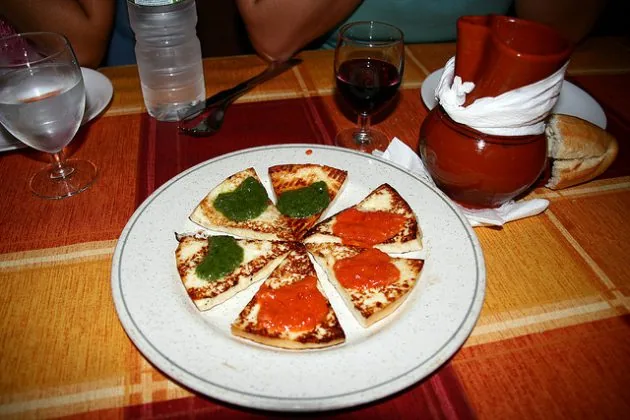
- Grilled cheese with mojo. Perfect for getting started and dipping bread without embarrassment.
- Garbanzas. A flavourful chickpea stew that is perfect on a cooler day.
- Gofio escaldón. Intensely Canarian and very filling.
- Carne fiesta. Marinated fried pork with the kind of flavour that calls for another potato.
- Ribs with potatoes and corn on the cob. A classic when it is done well.
- Ropa vieja. Chickpeas, meat, potatoes and the flavour of slow cooking.
- Goat meat. It is not for every palate, but when it is good, it is outstanding.
- Papas arrugadas with mojo. A Canarian staple that needs no introduction.
- Local wine. Ask whether it is white, red or fruity and let the staff guide you.
And a friendly warning: portions tend to be generous. If there are two of you, start with two or three dishes to share and decide afterwards. Enthusiasm at a guachinche is a wonderful thing, but ordering as though there were no tomorrow often ends with half the table staring silently at the serving dishes.
An easy guachinche route if you are travelling by car
To keep things simple, you can organise your meal according to the area where you are staying:
- If you are in Puerto de la Cruz: look at La Orotava, Los Realejos or Santa Úrsula.
- If you are in Santa Cruz or La Laguna: try La Laguna, Tacoronte or El Rosario, or head towards La Victoria and La Matanza.
- If you are in Costa Adeje or Los Cristianos: look in Arona, San Miguel, Granadilla or Guía de Isora. For the classic experience, set aside time to travel north.
- If your route includes Garachico, Icod or Teno: look in Icod, La Guancha, Los Realejos or Guía de Isora.
- If you are heading up to Teide: La Orotava, Vilaflor and the mid-altitude areas may fit your route, depending on where you go up and come down.
A car makes a real difference for this type of plan. Many guachinches are outside town centres, on roads where public transport is not always practical. If you need to travel around the island, you can check the car hire options in Tenerife and organise your route at a relaxed pace.
Advice to avoid getting it wrong
- Book or call ahead, especially on Friday, Saturday and Sunday.
- Do not go in a hurry. The experience is about enjoying a relaxed meal.
- Take a light jacket if you are heading to the mid-altitude areas. In Tenerife you can leave the beach in sunshine and end up eating somewhere distinctly cool.
- Do not trust the word “guachinche” alone. Check photos, the menu, recent reviews and whether home-grown wine is mentioned.
- Ask about parking. Some are on narrow streets or in rural areas.
- If you drink wine, drive responsibly. It may sound obvious, but it is the most important advice in this entire guide.
Frequently asked questions about guachinches in Tenerife
Which is the best area for guachinches in Tenerife?
The north is the classic area, particularly La Orotava, Los Realejos, Santa Úrsula, La Victoria de Acentejo and La Matanza de Acentejo. There is a stronger wine tradition, more mid-altitude farmland and a greater concentration of establishments.
Are guachinches open all year?
Not necessarily. A traditional guachinche opens seasonally and depends on wine from its own harvest. You should therefore call ahead even if the place appears on maps or social media.
Are there guachinches in southern Tenerife?
There are options in Arona, San Miguel, Granadilla, Guía de Isora and other mid-altitude areas, but the most traditional experience and the greatest number of establishments are usually found in the north.
What is the difference between a guachinche and a Canarian restaurant?
An authentic guachinche is tied to home-grown wine, has a limited opening season and offers a short menu. A Canarian restaurant can serve traditional dishes all year round, with a broader menu and the usual operation of a restaurant.
Which dish should I order on my first visit?
For a first visit, a very satisfying combination would be grilled cheese, garbanzas or escaldón, carne fiesta and papas arrugadas. If there are more of you, add ribs, ropa vieja or goat meat.
Do I need a car to visit guachinches?
Not always, but it helps enormously. Many are in hillside neighbourhoods, on rural roads or in mid-altitude areas where travelling by public transport can be slow. If you want to follow a route through several municipalities, a car is the most convenient option.
In short, a good guachinche is not measured by having the prettiest dining room, but by offering honest food, local wine and that feeling of experiencing the real Tenerife. Arrive hungry, call ahead and leave time for conversation after the meal. That is where the magic begins.